Case study
TL;DR

Background
Having survived college on a tight budget and an even tighter schedule, ready-to-cook dosa batters and coffee decoctions were practically my roommates. This was a brand that I'd genuinely admired for both its values and its products, known for turning traditional staples into modern, ready-to-cook essentials. So when this project landed on our table, I was quietly manifesting my way onto the team (and not-so-quietly begging my lead to put me on it).
We designed a sales planning and tracking system for one of India’s fastest-growing fresh food brands, delivering hundreds of thousands of fresh, perishable food packs to retailers across India and the Middle East every day. My admiration combined with a tight deadline made this one of the most exciting projects I’ve worked on.
Impact
Faster, more reliable daily operations
By centralising scattered flows into one interface, the new system significantly reduced task completion time during morning rush.
Cleaner data, fewer errors, stronger audit trails
Replacing Excel logging with a clean digital flow reduced data loss, improved traceability, and eliminated manual duplication across teams.
Scalable workflows that support aggressive expansion
The system now supports growing routes, SKUs, and cities without breaking down.
Business problem
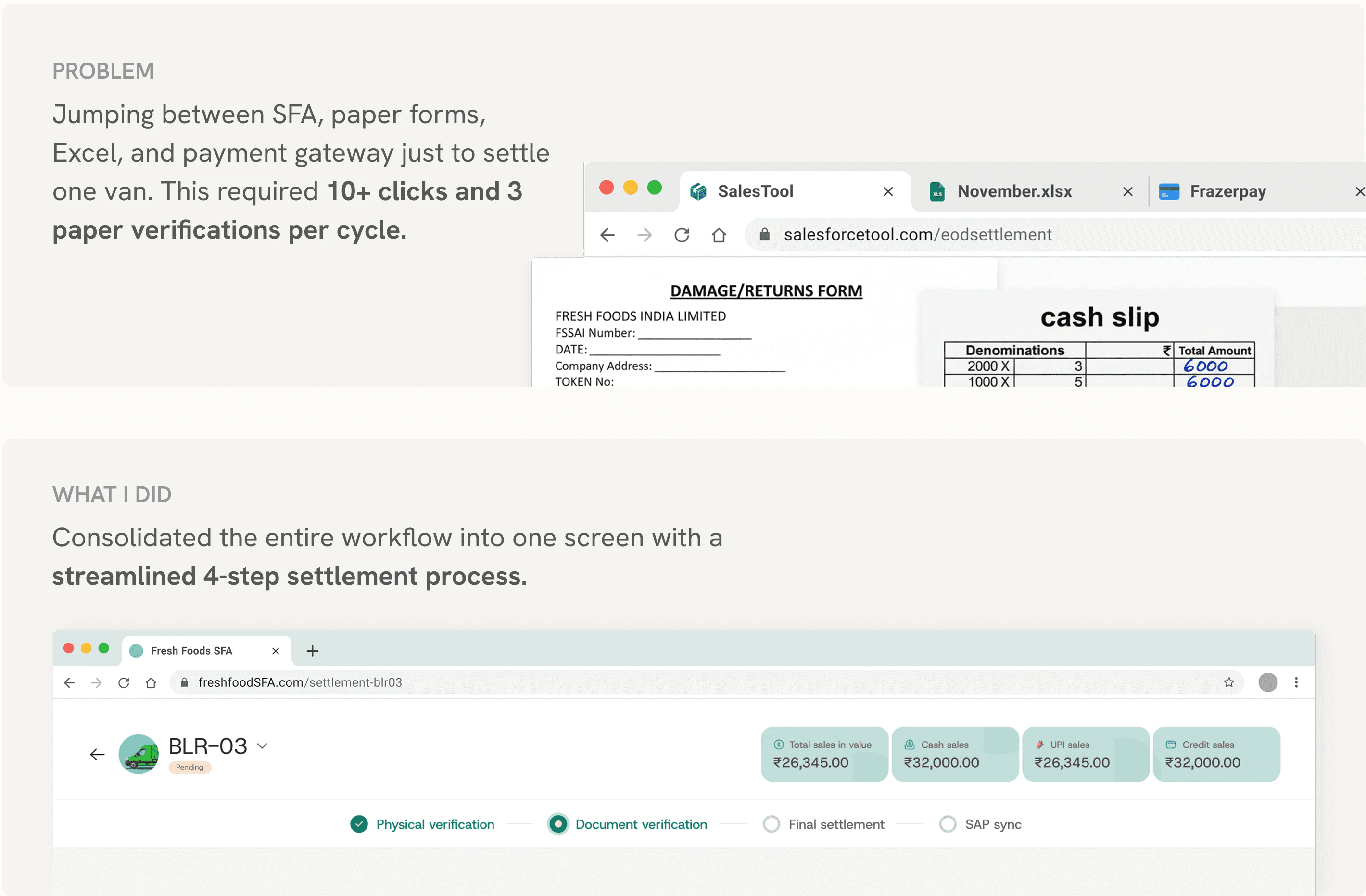
The company grew fast, and to catch up, employees built workarounds just to keep things running. Tracking numbers in Excel, printing out checklists, manually verifying records, and juggling multiple tabs just to complete a single task.
This patchwork approach led to data duplication, information loss, and process gaps that the system couldn’t flag and employees had to hunt and patch up.
My role
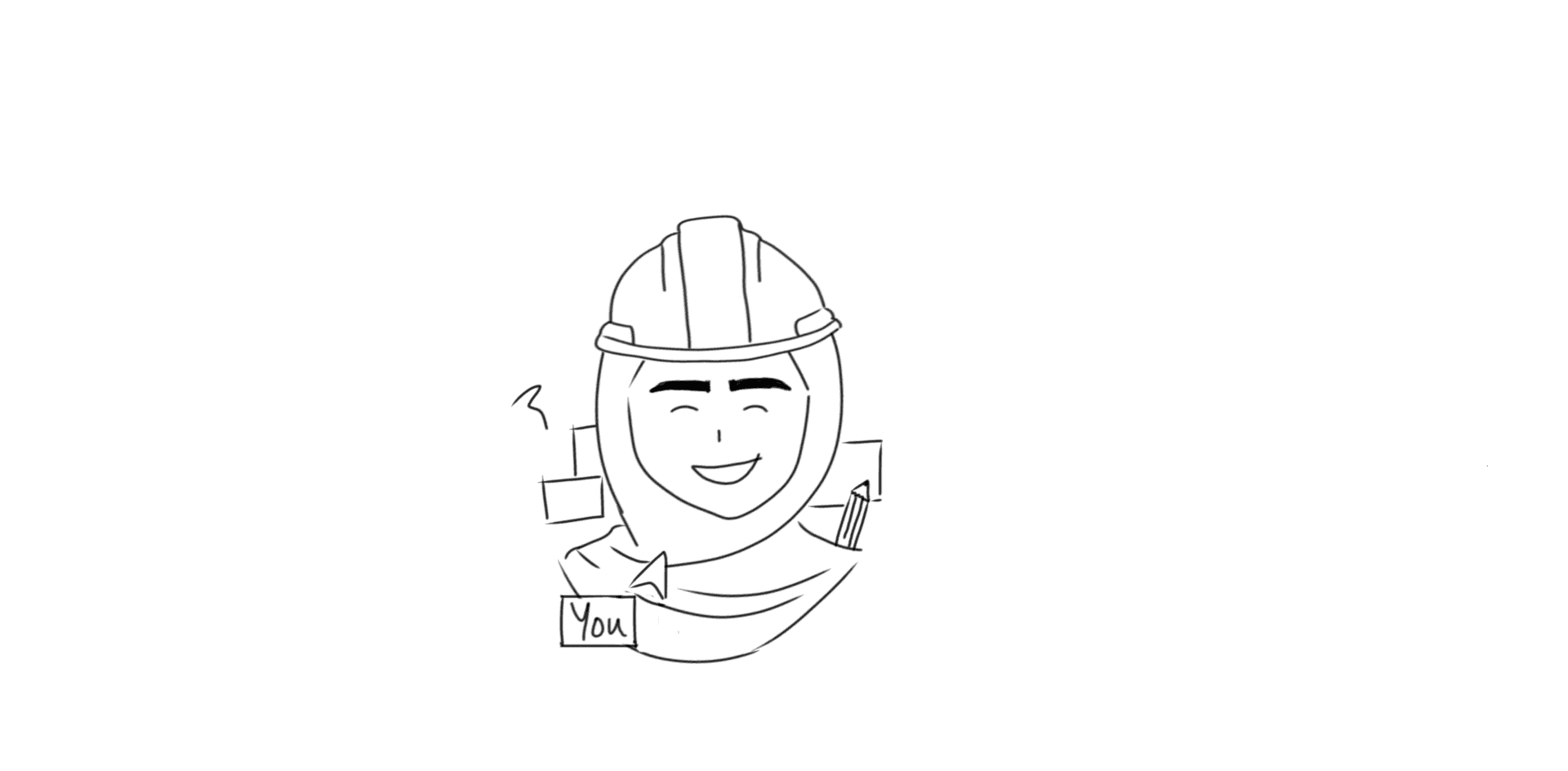
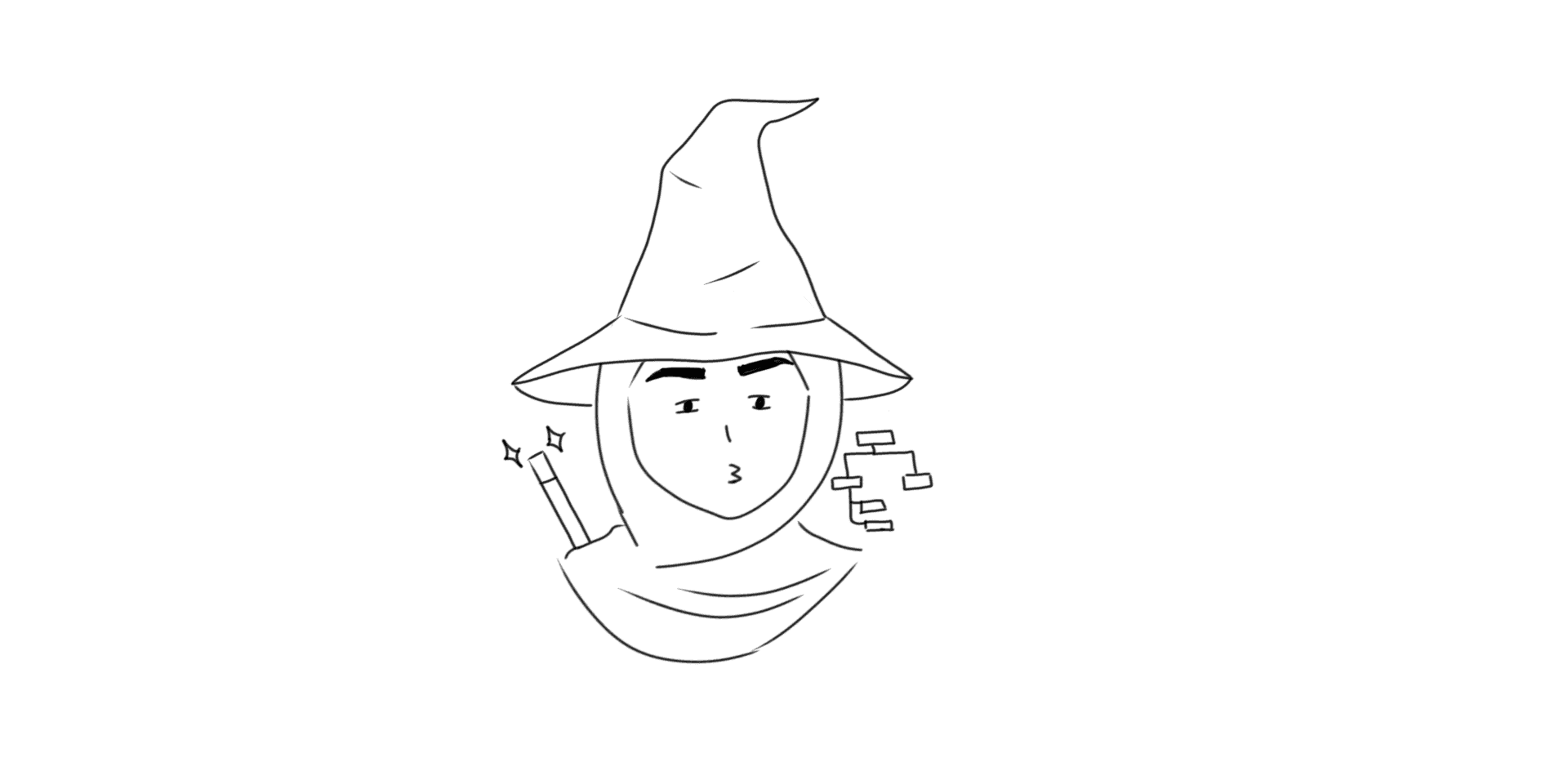
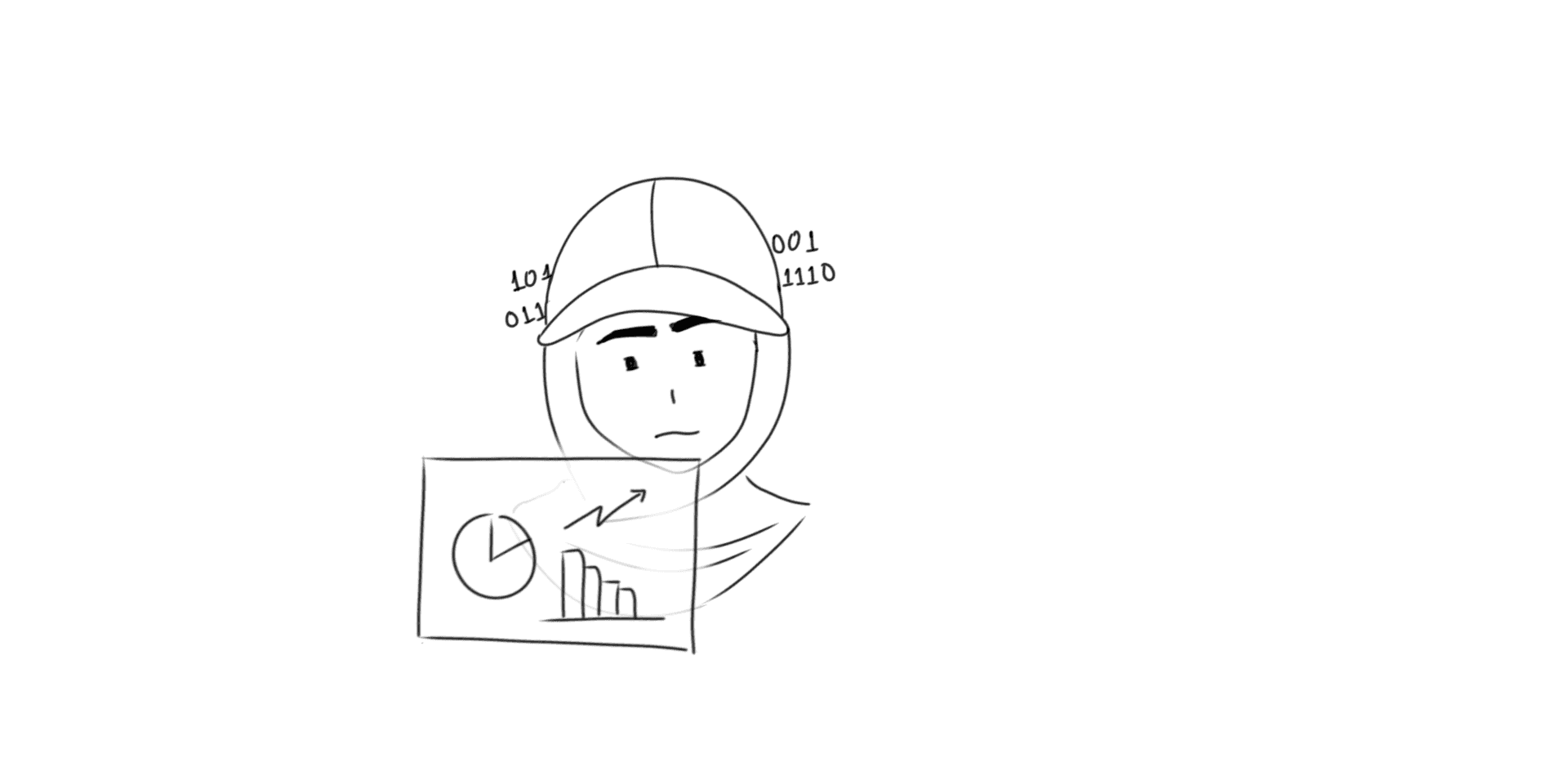
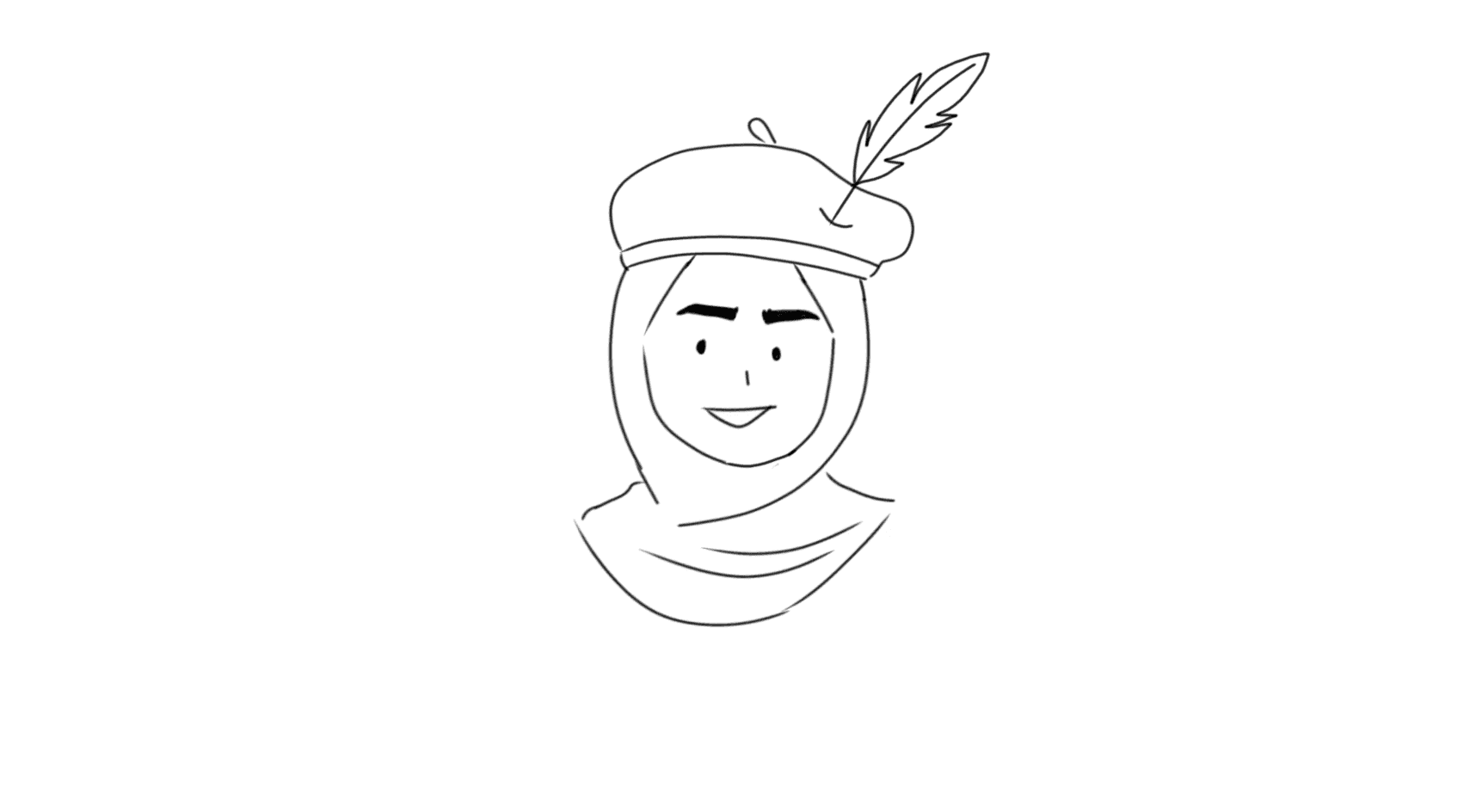
I worked as the UX designer for two core user groups, designing their end-to-end experiences while collaborating closely with my team lead and teammates who owned parallel workflows. The project involved constant coordination with UI designers, project managers, and developers to move fast and meet tight deadlines.

Solution
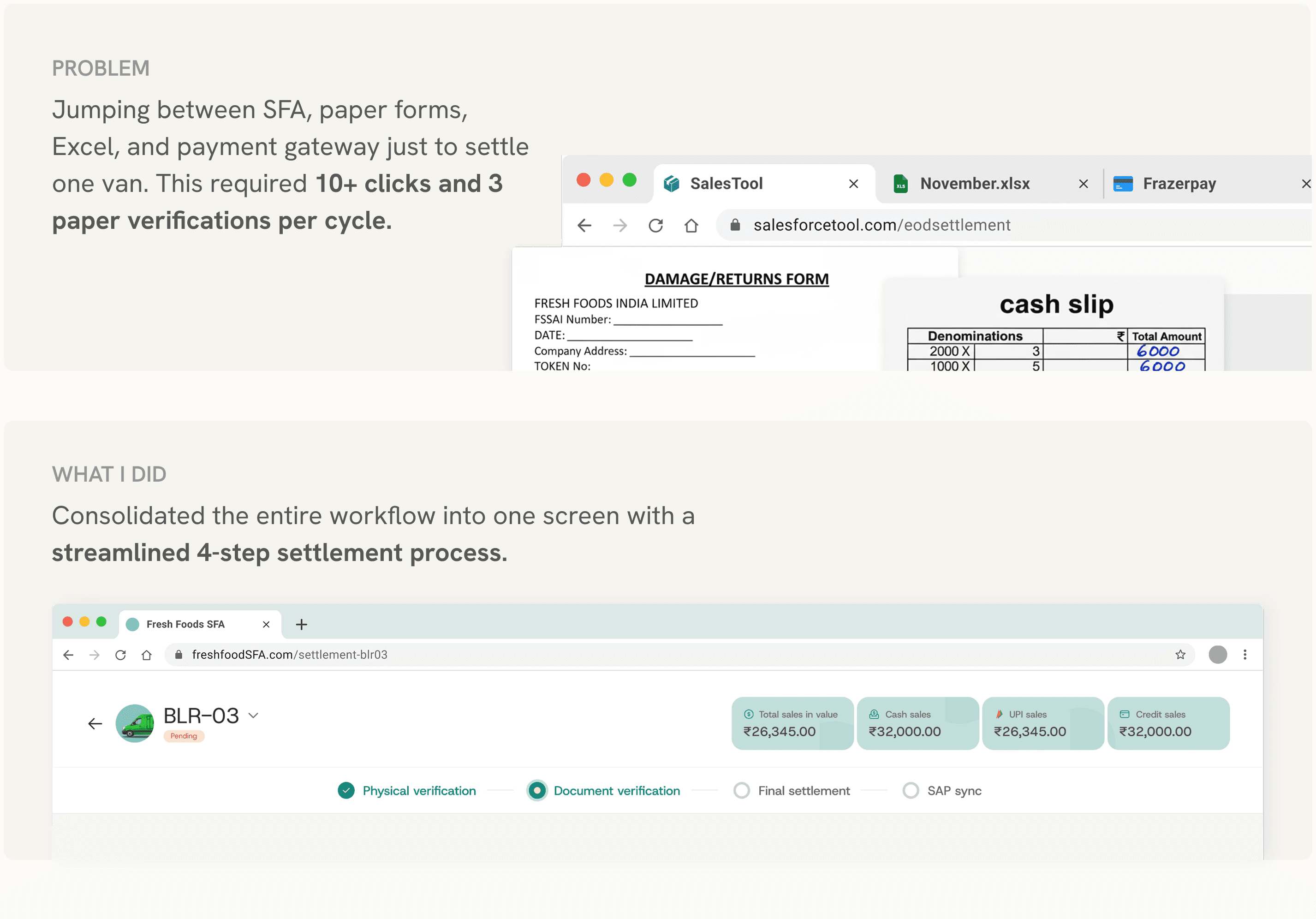
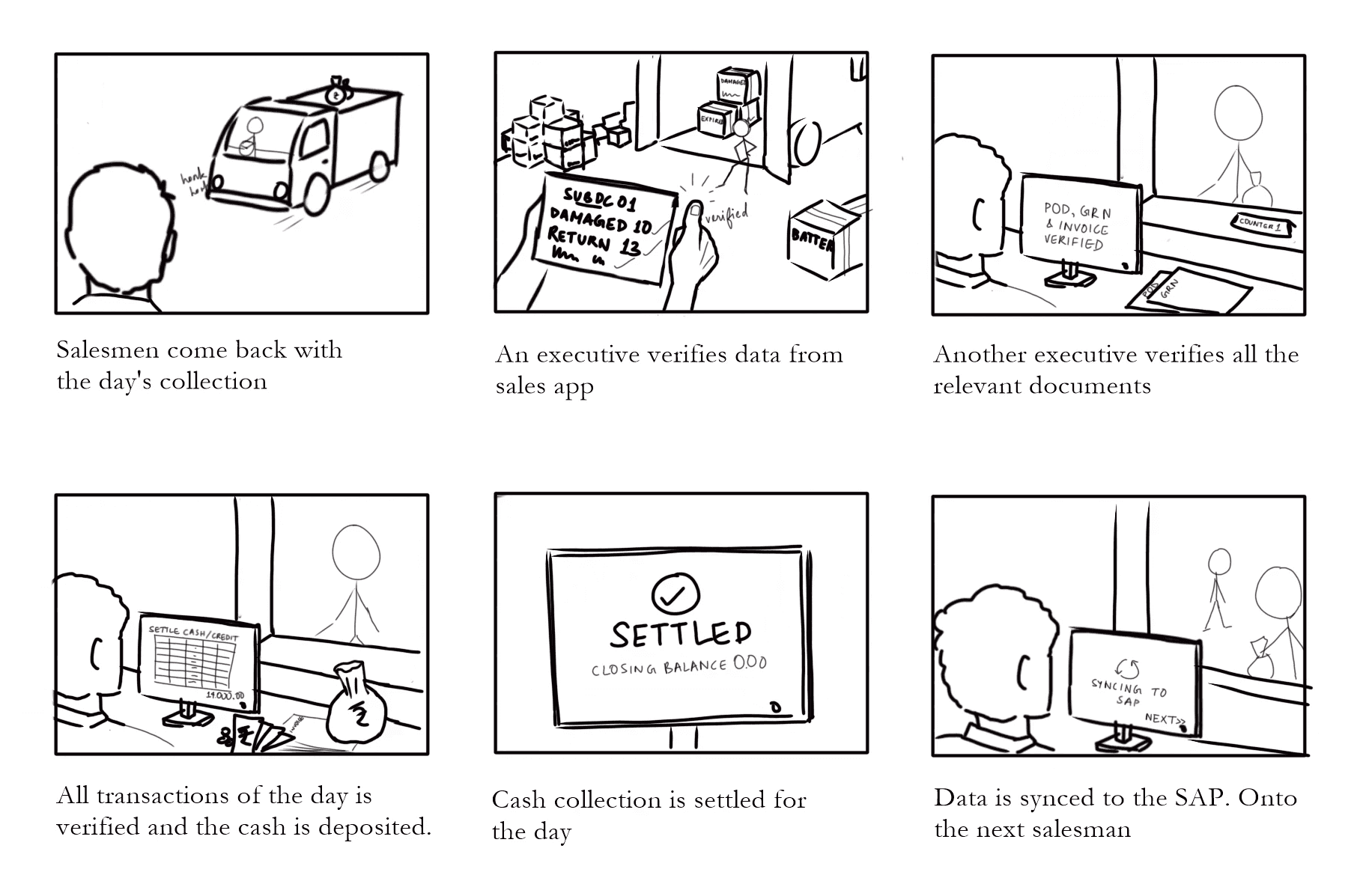
From 4-tool chaos to a unified settlement flow
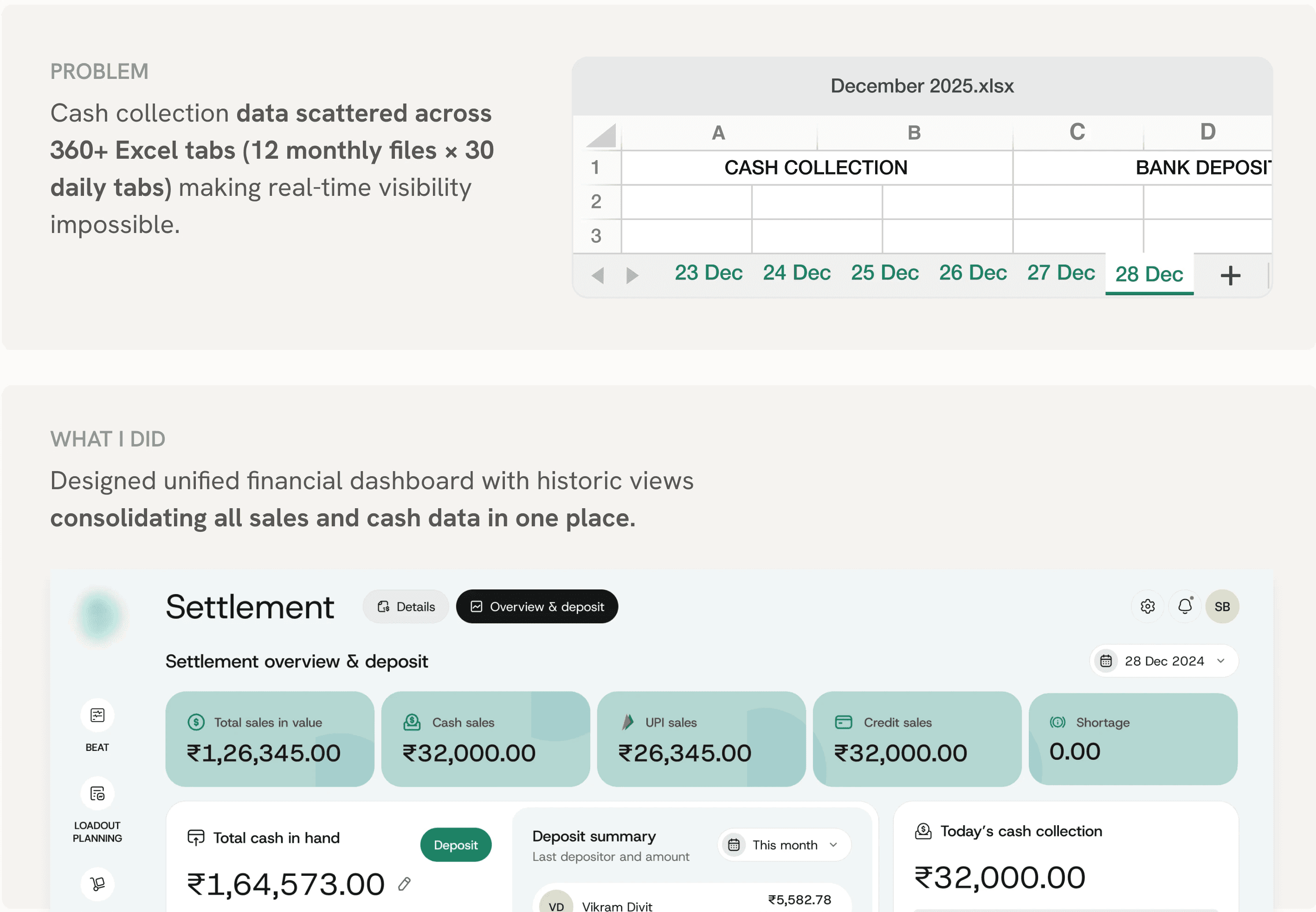
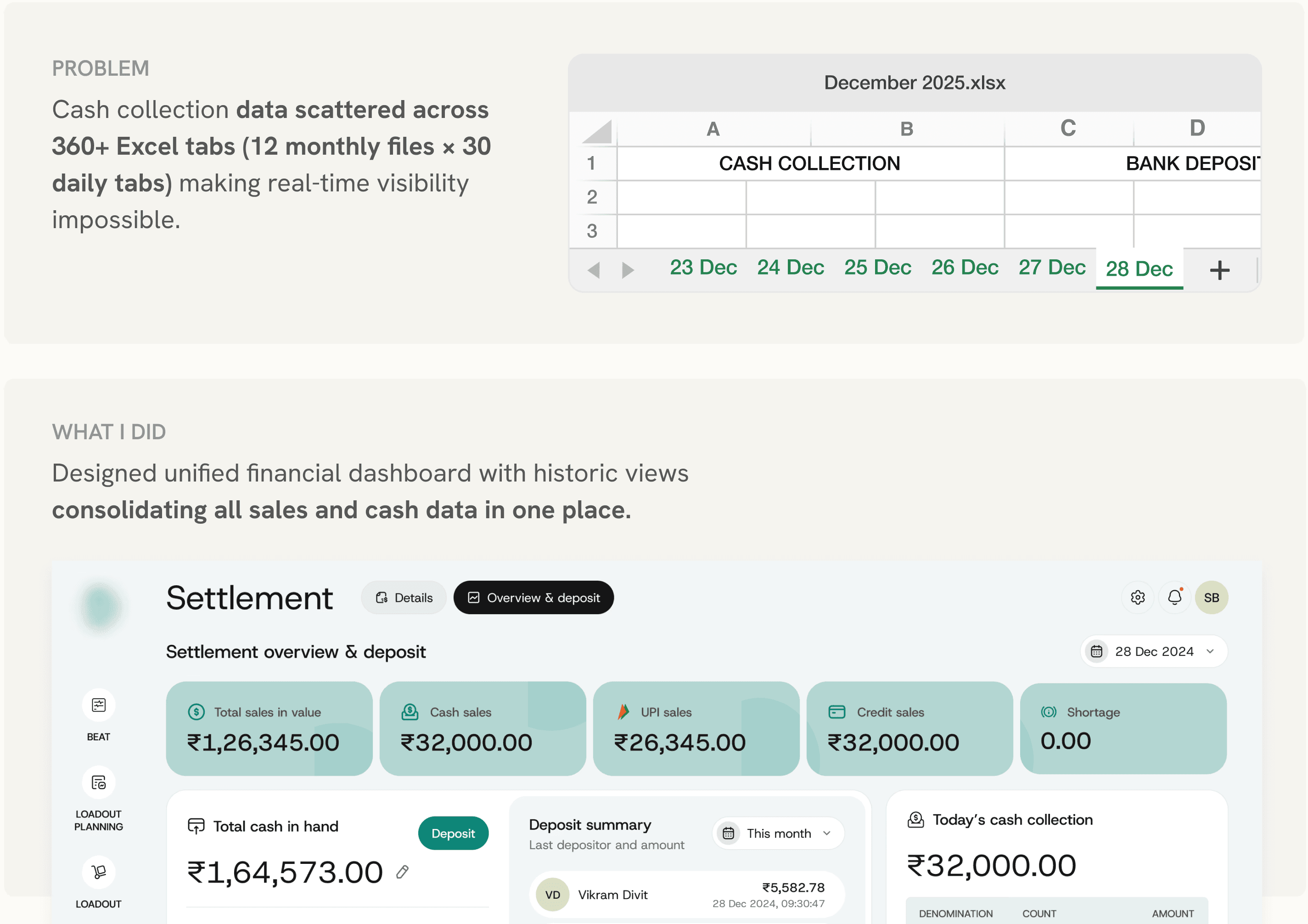
From buried Excel data to real-time financial dashboard
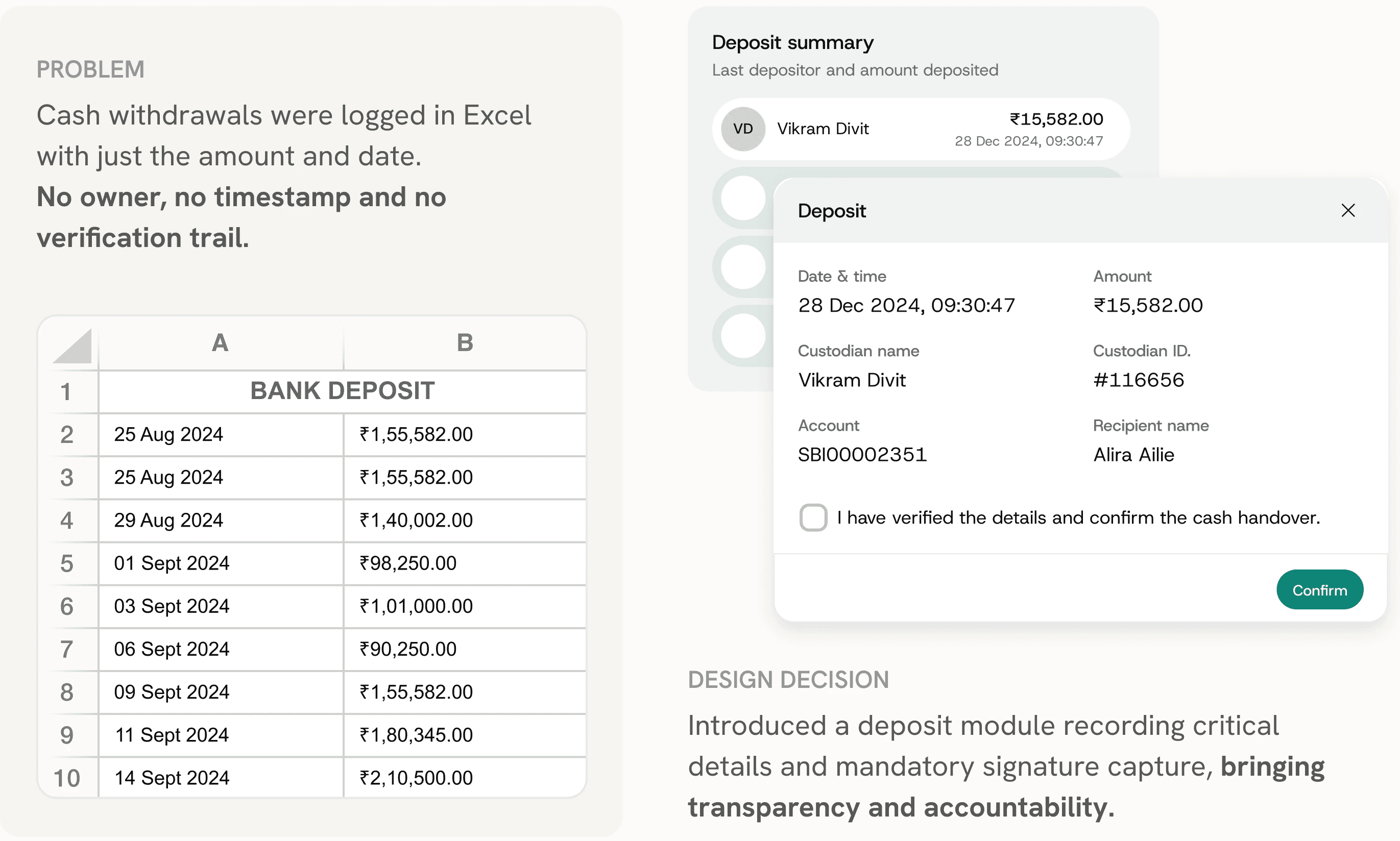
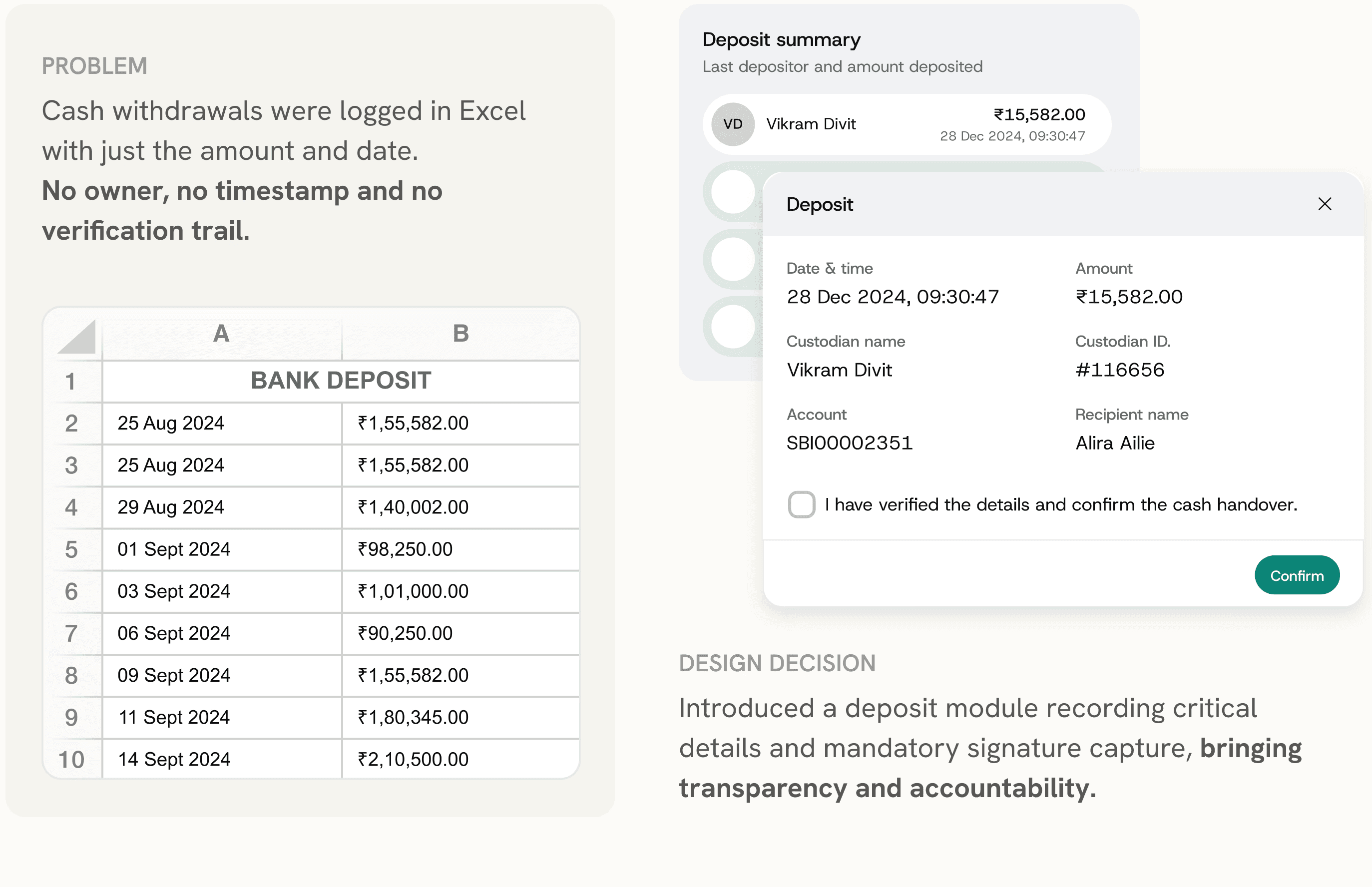
From anonymous logs to verified audit trails
Learning
Meet the users where they are.
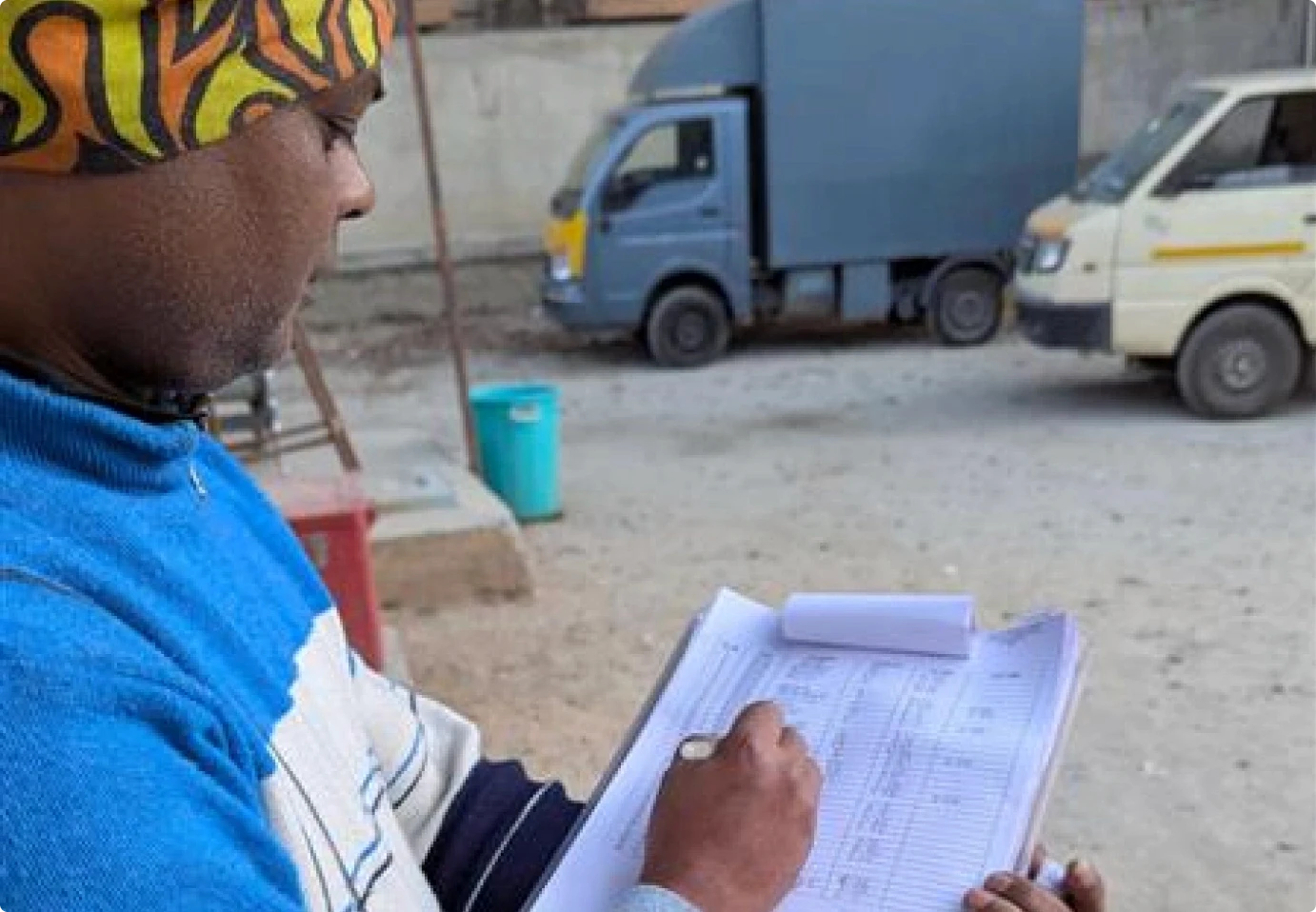
We were initially dependant on a representative to understand the users. But shadowing users completely shifted our understanding and made me realise how proper research drastically improves user understanding.
UX processes aren't a checklist.
I didn't realise I thought of methodologies as a checklist, do this then that and that, even when it didn't inform design. In real world projects, UX processes aren’t always linear and some aren't always necessary, and that’s okay.
UX is fun!
Working on something knowing it helps hundreds of people do their jobs easily made me realise, I do like what I do for a living. And it's fun! (mostly)